Why Your Coloring Looks Flat — pssttt… it’s not your blending

Colorists assume dimensional coloring happens naturally…
… If you can find the perfect shade color and find the best light source.
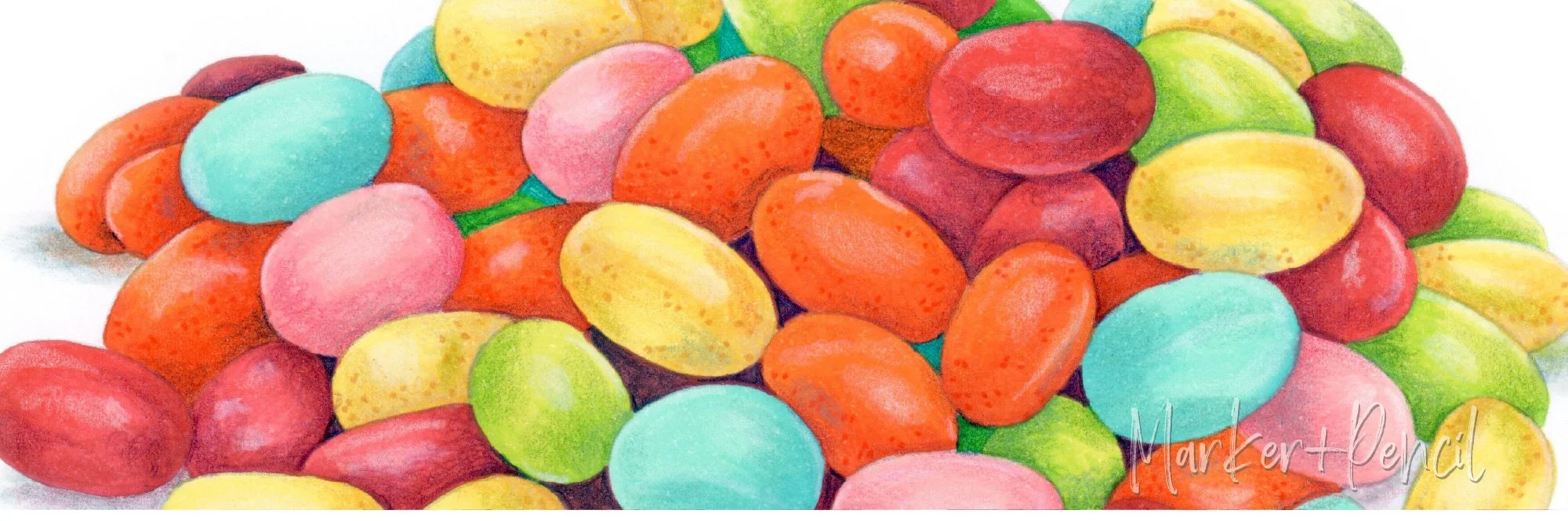
This leads to cartoonish coloring because you’re so focused on shading— you’re forgetting about the jellybean!
Realism starts to make more sense when you stop thinking about shade as a lighting trick and start thinking about the object itself.
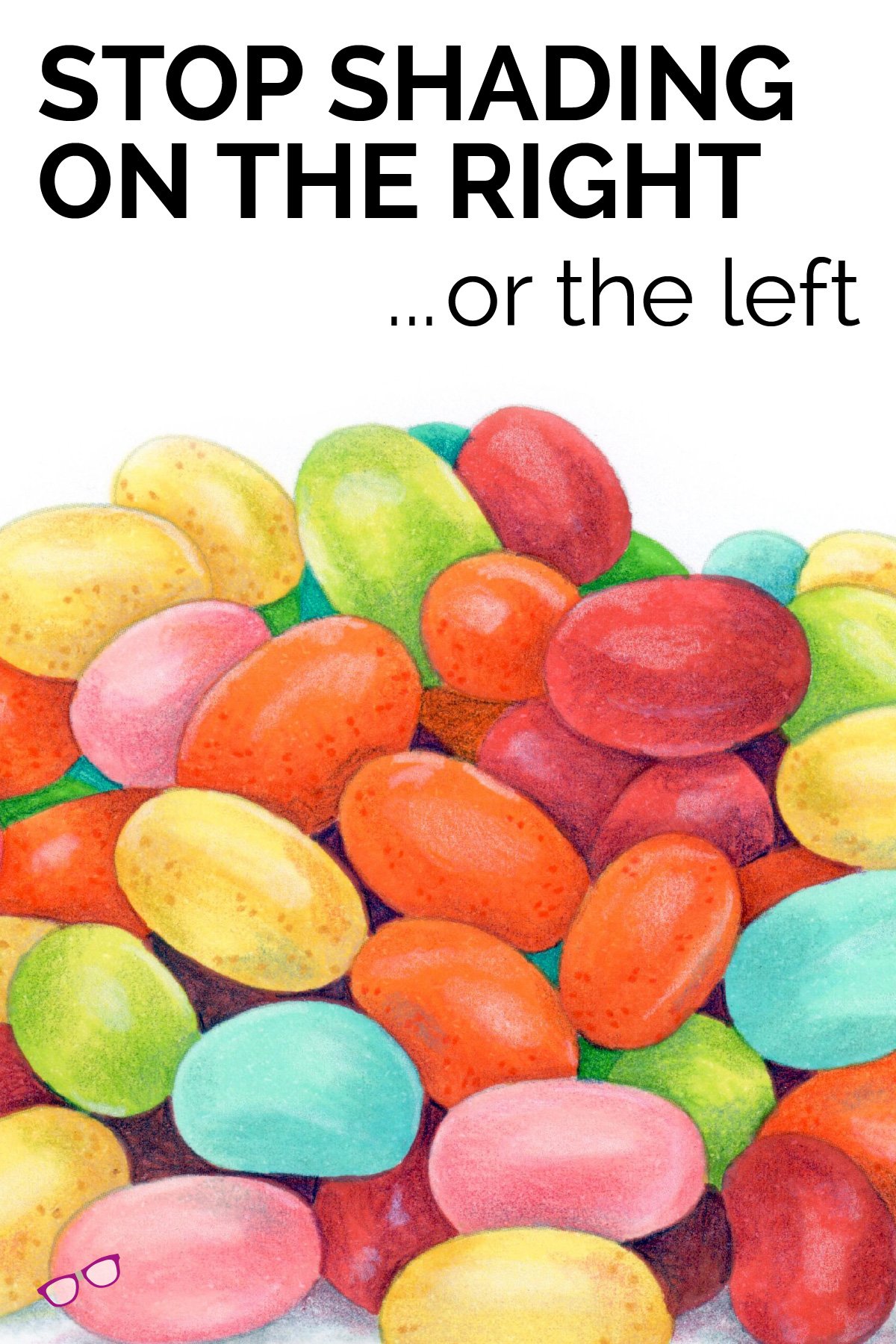
Too many coloring classes teach an easy but outdated “directional lighting” shortcut where students always shade on the right and highlight on the left (or vice versa).
But realistic coloring is actually easier when you color the dimensional form of an object rather than fumble and bumble, trying to recreate unrealistic lighting conditions.
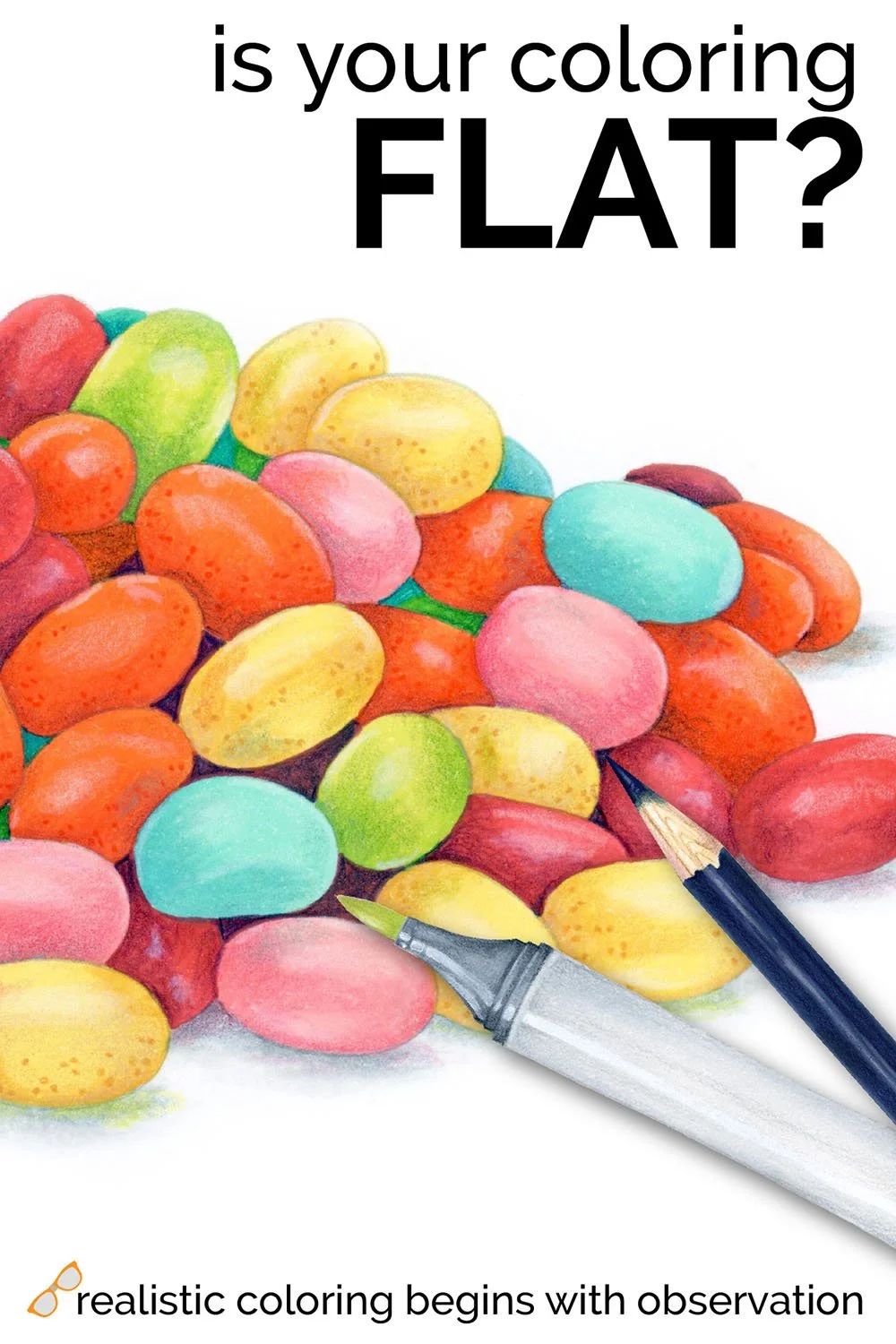
FORM is the three dimensional shape of every object. Forms have volume, depth, and height. Capturing the form is essential to coloring with realism.

Let’s Change Our Approach:
A jellybean is always jellybean shaped no matter which direction the light comes from. Even a jellybean locked in a dark closet is still jellybean shaped.
So lighting alone can not determine shape.
Instead, artists move our eyes across the surface of an object, looking for places where the color naturally shifts lighter or darker.
Lights and darks change slightly from jellybean to jellybean. Capturing this change adds realism to the entire pile of beans.
Why It Works:
When you stop assuming the shade will be on a particular side and start adding shade where you actually see shade on a real jellybean, your shading looks more accurate.
Accuracy always adds realism.

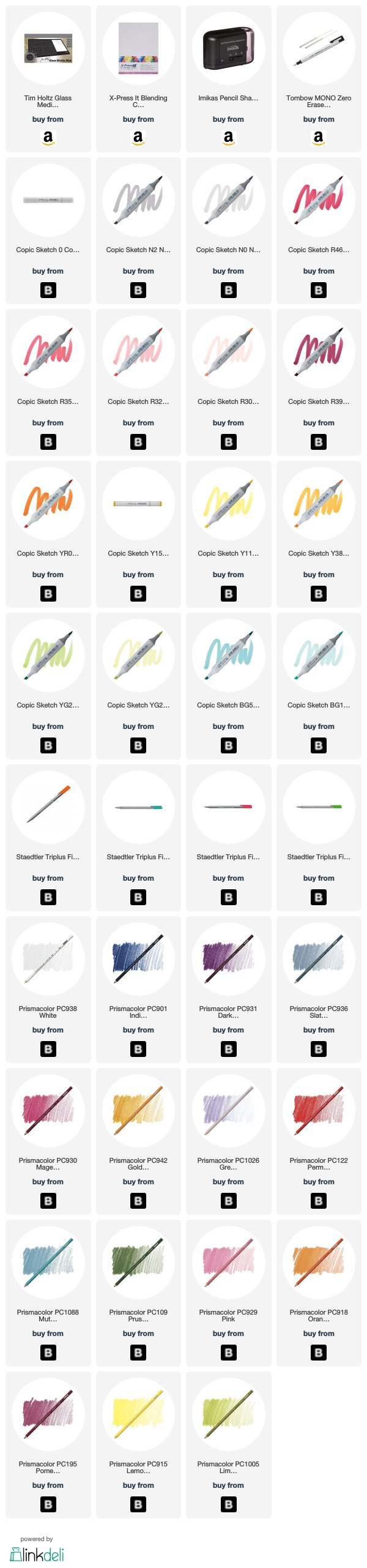
Supplies used in “Jellybeans”:
Copic Alcohol Markers
Prismacolor Premier Colored Pencils
Smooth Bristol Board
Full supply list with specific colors at the bottom of this page.
In the Jellybeans Workshop inside ColorWonk, I share how to develop an artist’s instinct.
We always look for the form first, before worrying about color selection or shade.
When you focus on form first, realism will follow.
The amazing thing about learning to color forms is that literally everything we color has a form.
So this isn’t just a workshop about cute jellybeans— this jellybean technique can be used to color doughnuts, daffodils, or even a dachshund on a unicycle. The options are endless!

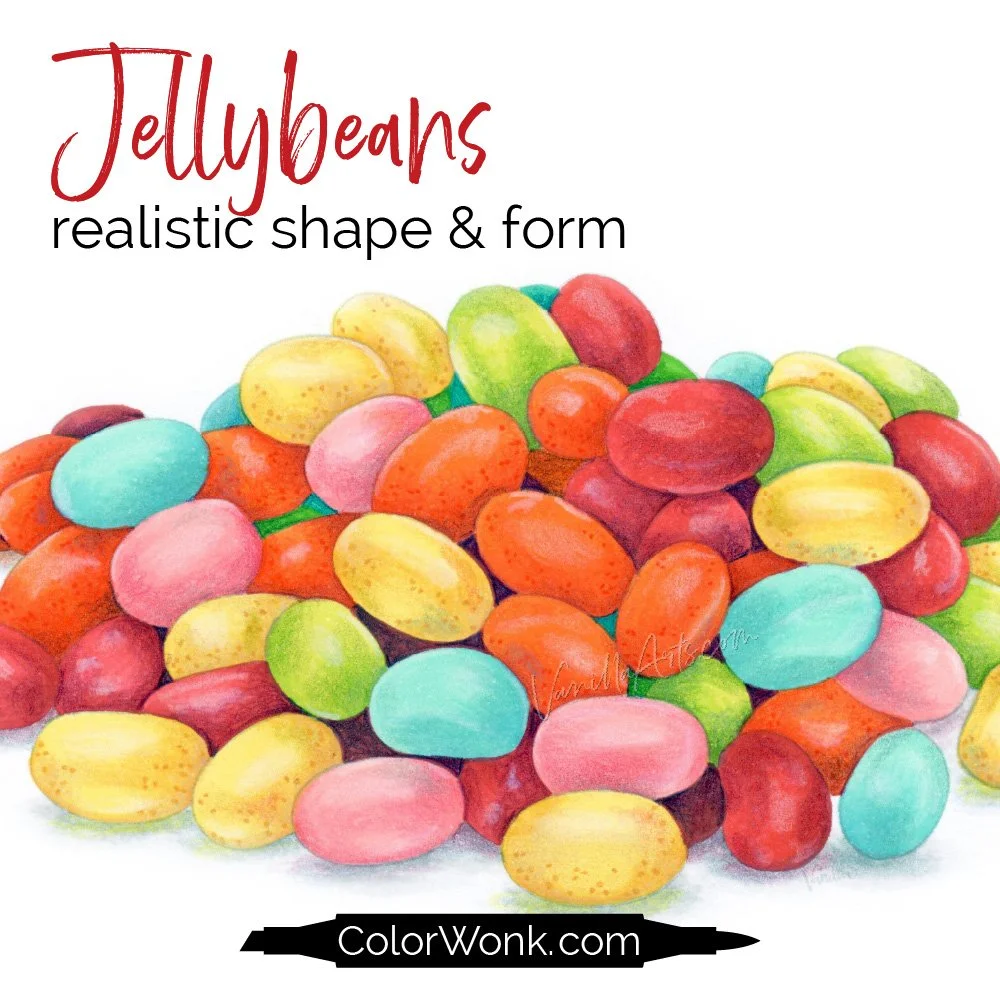
Jellybeans is one of my signature workshops here at ColorWonk
ColorWonk is a monthly membership for colorists and shy artists who want to improve realism, artistic observation, and color confidence through workshops, livestreams, and a growing library of artistic education.
It’s like art school for coloring!
If you enjoy this deeper way of thinking about color, you’ll feel right at home inside ColorWonk.
New to ColorWonk? Learn how membership works.
Not ready for classes yet?
Every Saturday, I send a free color theory lesson designed to help adult colorists better understand why some coloring techniques work while others fail miserably.
It’s a simple way to improve your coloring while getting to know me and my Color Wonky style.
Get your FREE subscription to the Vanilla Beans Newsletter here and I’ll see you on Saturday!
Related Articles:
(click to read)
Supplies Used in Jellybeans: